Research Article | | Peer-Reviewed

Influence of Social Media Marketing on Consumers’ Purchasing Decision Towards the Restaurant Industry in Bangladesh

Received: 2 July 2025     Accepted: 17 July 2025     Published: 13 August 2025
Views:       Downloads:
Abstract

The broader objective of the study was to evaluate the influence of the social media marketing features—Informativeness, Interactivity, Perceived Relevance and Brand Trust on consumers' purchase decisions within the restaurant industry in Bangladesh. Employing a quantitative research design, data were collected via an online survey targeting active social media users who regularly engage with restaurant brands. A total of 205 valid responses were analyzed using SmartPLS 4.0 for structural equation modeling. The findings revealed that Brand Trust plays a significant role in influencing Purchase Decisions, underscoring the importance of trust in reducing uncertainty and fostering consumer confidence in service-oriented sectors such as restaurants. These finding highlights that maintaining transparent and trustworthy communication on social media platforms is essential for driving purchasing behavior. Perceived Relevance was also identified as a significant predictor of Purchase Decisions, suggesting that tailored and relevant marketing content on social media effectively captures consumer attention and drives purchasing behavior. However, the study found that while relevance engages consumers, it does not necessarily translate into building long-term trust in the brand. In contrast, Informativeness and Interactivity were found to have no significant direct effects on Purchase Decisions. Despite this, these features remain important for fostering engagement and building a foundation for trust, as interactive and informative content can enhance the consumer-brand relationship over time. In summary, the findings emphasize the pivotal role of Brand Trust and Perceived Relevance in influencing Purchase Decisions, while Informativeness and Interactivity serve as supportive elements in strengthening consumer engagement and trust. These results offer actionable insights for marketers in the restaurant industry to optimize their social media strategies by prioritizing trust- building and relevance.

Published in Journal of Business and Economic Development (Volume 10, Issue 3)
DOI 10.11648/j.jbed.20251003.13
Page(s) 147-162
Creative Commons

This is an Open Access article, distributed under the terms of the Creative Commons Attribution 4.0 International License (http://creativecommons.org/licenses/by/4.0/), which permits unrestricted use, distribution and reproduction in any medium or format, provided the original work is properly cited.

Copyright

Copyright © The Author(s), 2025. Published by Science Publishing Group

Keywords

Social Media Marketing, Brand Trust, Purchase Decision, Informativeness, Interactivity, Perceived Relevance, Restaurant Industry in Bangladesh

1. Introduction
The notion of consumer purchase decision-making has attracted considerable focus within recent marketing scholarship. As outlined by Salem , this process encompasses a series of stages, starting with the recognition of a need, followed by the exploration of available options, evaluation of alternatives, and culminating in the selection of a product or service. Critical considerations in these decisions include the choice of product, the place of purchase, and the associated price, Park, et, al, . Consumer purchase decisions are shaped by their perceptions of a brand’s offerings, their level of satisfaction from prior experiences, and the brand’s capacity to fulfill specific needs Hafez, Kim & Sung, . To influence these choices, businesses strategically deploy marketing tools, such as advertising campaigns and promotional initiatives, to ignite consumer interest and drive purchasing behavior, Salem; Kim & Sung, .
The advent of the digital age has fundamentally transformed how businesses engage with consumers, positioning social media marketing (SMM) as a central pillar of modern marketing strategies, Kaplan & Haenlein; Cheung et al., . The rise of platforms such as Facebook, Instagram, WhatsApp, and niche online communities like the Foodies Gossip Group has empowered companies to connect with consumers effectively, influencing their purchase decisions through attributes like informativeness, interactivity, and perceived relevance, McClure & Seock, Puriwat et al., . These platforms facilitate broad audience reach and real-time engagement, cultivating brand trust and fostering consumer loyalty Grover et al., Gómez et al., 12]. Zeng & Gerritsen, Hanaysha, . In Bangladesh, food influencers have gained prominence, visiting restaurants, sampling diverse cuisines, and sharing detailed reviews and recommendations. Within the highly competitive restaurant industry, social media serves as a critical factor influencing consumer purchase decisions. Beyond functioning as advertising channels, social media platforms provide interactive spaces where consumers discover brand- related content, exchange experiences, and develop purchase intentions, Gómez et al., Zeng & Gerritsen, .
The shift toward digital marketing has intensified since the pandemic, with businesses increasingly prioritizing online engagement strategies, Mason, Cheung et al., . Moreover, the widespread use of mobile technology has diminished reliance on traditional media, solidifying social media’s role as a primary platform for brand interactions and purchase decisions Park et al., Chatterjee, . Key social media marketing elements—such as informativeness, interactivity, and perceived relevance—play crucial roles in shaping consumer behavior. Together, these features enhance trust, engagement, and perceived value, delivering a more personalized and interactive shopping experience that strengthens brand- consumer relationships and boosts purchase likelihood, Alalwan et al., Zhu & Cheung, Zeng et al., .
Despite the increasing emphasis on social media marketing and digital engagement, significant research gaps remain in understanding its impact on actual purchase decisions, particularly in emerging markets. Many previous studies have focused on purchase intention rather than real purchase behavior of consumer, Mason et al., Hasan & Sohail, . Moreover, the regional and cultural contexts influencing digital marketing effectiveness remain underexplored, particularly in Bangladesh. Prior research has emphasized the need for greater investigation in emerging markets, where cultural, economic, and technological factors may significantly alter consumer response to social media marketing, Islam, et al., .
This study seeks to fill up those gaps by examining the direct effects of informativeness, interactivity, perceived relevance, and brand trust on consumer purchase decisions in the restaurant industry in Bangladesh. Emerging markets like Bangladesh present a unique landscape where social media adoption is rapidly growing, yet empirical studies on its impact remain scarce. The widespread adoption of smart phones and internet services has integrated social media platforms into consumers' daily routines, making them primary sources of information and interaction. Platforms like Facebook, Instagram, YouTube, and TikTok are widely utilized by consumers to discover restaurants, read reviews, and engage with promotional content, Hewett, et al., . These platforms allow consumers to share their experiences, reviews, and recommendations, which in turn, shape the purchase decisions of others, Liu, H., J., et, al., . Businesses in the restaurant sector increasingly rely on these platforms to reach their target audiences, share timely updates, and strengthen customer relationships. The quality of product\ service information is necessary for consumers to evaluate products, thus impacting their online purchase decision, Liu, X., Featherman, et al., . This study employs structural equation modeling (SEM) using SmartPLS to analyze the relationships between social media marketing features, brand trust, and purchase decisions, Hair et al., Henseler et al., . By providing robust empirical evidence, this research aims to fill theoretical and practical gaps in literature. It offers valuable insights for marketers seeking to optimize their social media strategies in emerging markets like Bangladesh, contributing to a broader understanding of digital marketing's role in influencing consumer behavior in the restaurant industry.
2. Relevant Literature Review& Hypothesis Development
2.1. Purchase Decision
The concept of purchase decision has been extensively explored in prior research, defined as the process through which individuals select a specific product or service from a firm, often in preference to competing options, Kim & Sung, Hanaysha, Sohail et al., . The decision-making process is influenced by a mix of internal and external factors. Internal factors involve a consumer’s beliefs, attitudes, knowledge, personality, perceptions, lifestyle, roles, and status. On the other hand, external factors encompass cultural influences, social group affiliations, and social class, Salem, . These elements work together to shape consumer preferences and the way decisions are made. In today’s competitive environment, the vast array of available products and services has made it challenging for businesses to secure consumer loyalty and sustain growth. Social media platforms have emerged as a transformative tool for addressing this challenge, allowing brands to connect directly with consumers, convey marketing messages effectively, and influence purchasing behavior.
Social media platforms such as Facebook, Instagram, YouTube, and TikTok, which are integral to this study, are instrumental in raising consumer awareness and driving engagement. These platforms provide consumers with access to comprehensive information about a brand, enabling them to assess its value and benefits before making a purchase decision, Sharma, .
The interactive nature of social media amplifies its influence on purchase decisions through the power of word-of-mouth. These platforms allow consumers to share their experiences, reviews, and recommendations, which, in turn, shape the purchase decisions of others, Liu, . Research by Huang et al., . and Liu et al., . Underscores the critical role of social media in facilitating peer-to-peer influence and driving the success of marketing campaign.
2.2. Brand Trust
Brand trust is a foundational construct in marketing research, defined as the willingness of consumers to rely on a brand to consistently deliver on its promises, Chaudhuri & Holbrook, . It encapsulates consumer trust in the reliability, authenticity, and integrity of a brand, which is often established through positive experiences and clear, transparent communication.
According to Chen et al., . social media platforms enable trust-building through two primary mechanisms: firm-generated content (e.g., promotional posts, advertisements) and user-generated content (e.g., customer reviews, testimonials, ratings). Additionally, social proof metrics, such as likes, shares, and comments, amplify consumer trust by signaling a brand's authenticity and credibility. As brand trust increases among consumers in the target market, it becomes easier for companies to communicate their intended marketing messages and form positive impressions of their brands in consumers’ minds, Ebrahim, . Jadil, Rana, and Dwivedi . also found that online trust plays a significant role in shaping consumer behavior. Platforms like Facebook, Instagram, and forums like Foodies Gossip, which are utilized in this study, offer brands the opportunity to share engaging, relevant, and informative content that resonates with their target audience.
Brand trust is strongly associated with improved consumer perceptions and heightened purchase intentions, Ebrahim, Hanaysha, . demonstrated that trust allows brands to effectively communicate their value propositions, fostering positive associations and deeper consumer engagement. Similarly, studies by Jadil et al., and Park et al., confirmed that higher levels of trust in a brand correlate with more robust purchase decisions, as trust mitigates perceived risks and reinforces consumer confidence in the brand's offerings.
In the restaurant industry, brand trust holds particular significance in shaping consumer behavior. Social media reviews, customer testimonials, and direct interactions with a brand provide consumers with valuable insights into a restaurant’s reliability and service quality.
These elements play a crucial role in reducing uncertainty and enabling informed decision-making. For restaurant brands, consistently delivering promises, ensuring transparency in communication, and maintaining quality are vital for cultivating trust and fostering customer loyalty. In this study, brand trust is explored as one of the independent variables influencing purchase decisions in the restaurant industry. It complements the effects of other variables, such as informativeness, interactivity, and perceived relevance, by enhancing consumer confidence in the brand's offerings. Based on this understanding, the following hypothesis is proposed:
H1: Brand trust has a significant effect on purchase decision.
2.3. Social Media Marketing Features
Previous studies have examined various elements of social media marketing to understand their influence on consumer purchasing behavior, Alalwan, Wang,. This research focuses on three critical features of social media marketing— perceived relevance, interactivity, and informativeness—to assess their direct impact on purchase decisions. By focusing exclusively on these features, this study aims to provide insights into how social media marketing features influence consumer behavior, Gruzd et al., Mishra et al., . in the restaurant industry within Bangladesh.
The widespread adoption of social media platforms has transformed consumer engagement and decision-making processes. This growth is attributed to the accessibility, convenience, and broad reach of digital platforms. Social media platforms such as Facebook, Instagram, YouTube, and TikTok provide businesses with the ability to connect with consumers by delivering customized messages, fostering interactive communication, and sharing accurate information. These platforms play a crucial role in increasing brand visibility, consumer confidence, and purchase decisions. Furthermore, the ability of social media to rapidly disseminate information reduces consumer uncertainty and facilitates informed purchasing, Liao, .
Previous research has thoroughly examined the adoption and use of information technology, reflecting its growing importance in academic discourse. This increasing focus stems from the understanding that the success of technological systems heavily relies on how well individuals accept and engage with them, Fornell, Venkatesh et al., . In response, several theoretical models have been developed to evaluate technology acceptance at both individual and organizational levels. Among the most widely used are the Technology Acceptance Model (TAM) proposed by Fornell, and the Unified Theory of Acceptance and Use of Technology (UTAUT) introduced by Venkatesh et al. . The UTAUT model, in particular, has gained recognition as one of the most comprehensive frameworks for assessing the factors that drive technology adoption across diverse contexts.
Several studies Gruzd, Mishra, Puriwat & Tripopsakul, have employed UTAUT to investigate how social media marketing influences consumer behavior. Trust plays a crucial role in the adoption of any modern information technology system, Liu . When consumer develops a strong sense of trust toward brands by actively engaging on social media platforms, they are more likely to have confidence in purchasing their products or services. In the contemporary digital landscape, brands leverage social media to establish direct connections with consumers, promote their offerings, and cultivate a positive brand image. Furthermore, social media facilitates rapid information dissemination among consumers, which helps mitigate perceived risks associated with purchasing decisions, Liao . This study focuses on three key features of social media marketing that influence consumer purchase decisions:
Perceived Relevance: Zhu and Chang describe perceived relevance to the extent to which consumers perceive a marketing message as meaningful and aligned with them personal goals Perceived relevance is the extent to which consumers consider a marketing message meaningful and aligned with their needs Zhu & Chang, Alalwan et al., Zeng et al., . Social media platforms allow businesses to deliver tailored content to target consumers effectively, creating stronger engagement and increasing the likelihood of purchase decisions, Gautam & Sharma, .
Informativeness: Informativeness refers to the availability of accurate, timely, and relevant information that helps consumers make well-informed decisions, Gautam & Sharma, Hair , emphasized that informativeness enhances trust and equips consumers with the knowledge required to evaluate their options confidently. Platforms such as Instagram and YouTube excel in delivering visually appealing and informative content, which strengthens consumer confidence and purchase behavior, Lee & Hong, .
Interactivity: Interactivity is the extent to which digital platforms facilitate two-way communication between businesses and consumers, Jensen, Alalwan, Jadil et al., . By leveraging tools like comments, feedback, and real-time interactions, businesses can strengthen their connection with consumers and positively influence their behavior, Mishra et al., . In the restaurant industry, interactive campaigns can create engaging experience, encouraging consumers to trust the brand and make purchases. By leveraging these three features, businesses in the restaurant industry can create impactful social media marketing strategies to drive engagement and improve purchase decisions.
2.3.1. Perceived Relevance
Perceived relevance refers to the extent to which consumers regard a marketing message as personally meaningful and helpful in achieving their goals or aligning with their values, Zhu & Chang, . In social media marketing, perceived relevance is achieved through the design of customized messages tailored to specific consumer segments. This enables businesses to create impactful interactions with their target audience, fostering stronger engagement and loyalty. Social media platforms such as Facebook, Instagram, YouTube, and TikTok offer tools that allow brands to deliver tailored messages, emphasizing individuality and aligning content with consumer preferences. Zhu and Chen distinguished between highly customized messages targeting niche audiences and mass communication aimed at broad audiences.
Luxury brands like Burberry and Gucci have effectively utilized these platforms to share personalized content that resonates with individual consumer preferences, Sharma, . For restaurant brands in Bangladesh, perceived relevance plays a critical role in engaging consumers. Personalized content, such as targeted promotions, locally inspired menu recommendations, or campaigns reflecting regional tastes, aligns with consumers' interests and fosters positive brand perceptions.
In this study, perceived relevance is explored as a key element of social media marketing that influences consumer behavior. Platforms like Facebook and Instagram are particularly effective in delivering content that feels highly relevant to users, thanks to their advanced targeting capabilities. For restaurant brands in Bangladesh, these tools offer opportunities to respond quickly to customer inquiries, promote offers tailored to local preferences, and craft campaigns that resonate with individual consumer expectations, Gautam & Sharma, .
Park et al. , observed that marketing content perceived as relevant improves consumer purchase intentions by creating emotional connections. This study assumes that by leveraging the customization capabilities of social media platforms, restaurant brands in Bangladesh can effectively influence purchase decisions through relevant and meaningful content.
H2: Perceived relevance has a significant effect on purchase decision.
2.3.2. Informativeness
Informativeness in marketing refers to the ability to deliver meaningful, accurate, and relevant information to consumers, which shapes their perceptions and influences their purchasing decisions, Rotzoll & Haefner . Lee and Hong highlighted informativeness as a vital component of marketing communication, emphasizing its role in crafting compelling messages that capture consumer attention and drive behavior. Social media platforms, such as Facebook, Instagram, YouTube, and TikTok—central to this study—are powerful tools that enable businesses to share timely and relevant information about their products and services. The increasing prevalence of smartphones and the widespread accessibility of the internet have revolutionized how information is shared, particularly through social media. Unlike traditional advertising channels, social media offers businesses a cost-efficient and dynamic medium to engage with consumers in real-time. Consumers tend to trust content shared on social media— such as peer reviews, ratings, and user-generated testimonials—more than traditional forms of promotion, Cheung . This trust is instrumental in shaping positive brand perceptions, as accurate and detailed information about a brand’s value and quality builds confidence and fosters loyalty Harman, Warren .
Chen and Lin observed that the primary source of consumer information has shifted from traditional advertising to digital platforms, with social media playing a dominant role in influencing purchasing decisions. This shift underscores the importance of designing relevant and engaging content tailored to platforms like Facebook and Instagram, which were critical to study. Bilgin and Kethüda, . emphasized that informative advertisements and posts on social media not only enhance trust in a brand but also increase consumer willingness to interact with and purchase its offerings.
In the context of this study, informativeness refers to the extent to which social media marketing effectively communicates relevant and meaningful information about restaurant brands to the target audience in Bangladesh. Platforms such as Facebook, Instagram, YouTube, and TikTok play a key role in increasing customer engagement by ensuring consumers are well-informed about menu items, promotions, and brand updates. This, in turn, fosters trust, encourages frequent interactions, and positively influences purchase decisions, Jadil, et al., .
H3: Informativeness has a significant effect on purchase decision.
2.3.3. Interactivity
Interactivity, a pivotal aspect of digital marketing, has garnered significant attention in prior research due to its critical role in shaping consumer engagement. Jensen defined interactivity as the capacity of firms to enable stakeholders to share and exchange information within virtual environments. Kiousis expanded on this definition by emphasizing marketers’ ability to connect with current and potential customers online to disseminate essential marketing messages effectively, . Social media platforms such as Facebook, Instagram, YouTube, and TikTok have emerged as indispensable tools for fostering interactivity by enabling users to exchange and access diverse information. These platforms allow customers to gain substantial benefits when researching and making purchasing decisions, Mason .
Furthermore, as social media technologies continue to evolve, they enable deeper consumer-brand connections through discussions about a brand's attributes, benefits, and storytelling elements, Arjun . In the context of restaurant marketing in Bangladesh, interactivity on social media platforms plays a crucial role in enhancing customer engagement. Features such as liking, sharing, commenting, and following restaurant brand pages encourage consumers to actively participate with marketing content. For instance, when a customer interacts with a Facebook post about a restaurant’s menu, promotional offers, or events, this two- way communication strengthens the consumer’s connection with the brand.
It also creates a ripple effect, inspiring others within their social media network to engage, thereby amplifying the brand's visibility and reach. Research highlights the profound influence of interactivity on consumer behavior. In this study, interactivity is considered one of the independent variables directly influencing consumers’ purchase decisions. By enabling meaningful interactions between consumers and restaurant brands on social media, firms can build trust and foster purchase behavior, Arjun et al., . For example, platforms like Instagram and YouTube allow restaurant brands to share visually appealing, interactive, and engaging content, encouraging consumers to comment, share, and ultimately decide to visit these restaurants.
H4: Interactivity has a significant effect on purchase decision.
2.4. Research Gap
Existing studies on social media marketing have extensively explored features such as informativeness, interactivity, and perceived relevance, highlighting their role in influencing consumer behavior Alalwan, Wang et al., . However, there remains a lack of research focusing on the integration of these features with brand trust as an independent variable in predicting purchase decisions, particularly in the restaurant industry within developing markets like Bangladesh. While previous research, including Zhu and Chang , has highlighted the importance of perceived relevance, few studies have explored its direct effect on purchase decisions within the localized context of the restaurant sector. Moreover, much of the existing research on social media marketing features tends to overlook sector-specific applications, which limits its practical value for industries like restaurants where consumer engagement and trust are crucial. This study aims to fill these gaps by examining the direct impact of informativeness, interactivity, and perceived relevance on purchase decisions, along with brand trust, specifically within the restaurant industry in Bangladesh. In doing so, it provides valuable empirical insights into a market and sector that remain largely underexplored.
3. Problem Statement
In the highly competitive restaurant industry in Bangladesh, traditional marketing strategies are increasingly insufficient to capture the attention and loyalty of modern consumers, who are heavily influenced by digital and social media. Social media influencers have emerged as a significant force in shaping consumer behavior and purchase decisions, particularly within the food sector. These influencers, with their perceived expertise, trustworthiness, and attractiveness, wield substantial influence over their followers' dining choices. However, despite the growing prominence of social media influencers, there is a lack of comprehensive research on their impact on consumer purchase decisions within the Bangladeshi restaurant industry.
Understanding the extent and mechanisms of this influence is crucial for businesses aiming to optimize their marketing strategies and effectively engage with their target audience. Moreover, identifying the demographic characteristics of consumers who are more likely to be influenced by social media can provide important insights for more targeted and efficient advertising efforts. This study seeks to address these gaps by exploring the influence of social media influencers on consumer purchase decisions in the restaurant industry in Bangladesh. Specifically, it aims to examine the key factors that contribute to the effectiveness of social media influencers and to identify the demographic characteristics of consumers who are more susceptible to their influence. By addressing these issues, the study aims to provide actionable insights for businesses, enhance the academic understanding of social media influencer marketing, and inform policy development for ethical advertising practices.
4. Conceptual Framework of the Study
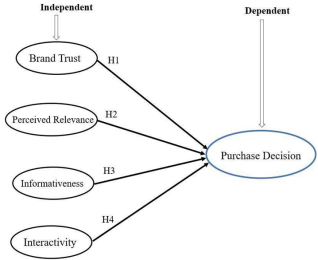
Various theoretical frameworks have been proposed to explain consumer purchase decisions in diverse contexts. Previous studies, such as Fornell, et, al., presented models to explain customer loyalty by analyzing the relationships among service quality, perceived value, trust, habit, and reputation in the context of Internet banking websites. Similarly, Hafez, et al. developed a model of customer loyalty specific to the restaurant industry. This study extends such research by investigating the factors influencing purchase decisions within the restaurant industry in Bangladesh. The research framework for this study integrates social media marketing features and brand trust as predictors of purchase decisions. Unlike many earlier studies that explored social media marketing's impact on purchase intentions, this model uniquely examines the actual purchase decisions of consumers. The framework includes four independent variables: Informativeness, Interactivity, Perceived Relevance, and Brand Trust, along with Purchase Decision as the dependent variable.
The research model aligns with prior literature and is developed using a combination of established constructs from earlier studies. Informativeness, interactivity, and perceived relevance represent social media marketing features that influence consumer decision- making. Additionally, brand trust is included as a critical factor, given its significant role in building confidence and fostering purchase behaviors, Chaudhuri Holbrook, . This study employs a structural equation modeling (SEM) approach using SmartPLS to evaluate the relationships between these variables. The proposed model, as depicted in Figure 1, was constructed based on an extensive literature review, and the hypotheses developed in this research aim to explore the direct effects of each independent variable on purchase decisions.
Figure 1. Conceptual Framework.
The Figure 1 reveals that informativeness reflects the ability of social media marketing content to provide relevant and useful information to consumers. Interactivity (INT) emphasizes two-way communication between businesses and consumers, enabling engagement and feedback. Perceived Relevance (PR) highlights the customization of marketing messages to align with consumer needs and preferences. Brand Trust (BT) represents the willingness of consumers to rely on a brand’s promise of value. Purchase Decision (PD) defines as the process through which consumers evaluate, select, and finalize their purchase choices. The proposed model contributes to the understanding of how social media marketing features and brand trust influence consumer purchase decisions in the restaurant industry. By analyzing these relationships in the context of Bangladesh, this research addresses existing gaps in the literature and offers insights into optimizing social media strategies for enhancing consumer engagement and driving sales.
5. Research Methodology
5.1. Research Design
This study adopts a descriptive research design, which is suitable for examining relationships between variables without manipulating them. Descriptive research enables the researcher to collect data and analyze patterns, behaviors, and trends systematically.
5.2. Types and Sources of Data
The data collection process is crucial for obtaining reliable information to validate the research objectives. This study employed primary data, collected through an online survey distributed via social media platforms.
Primary Data
The primary data were collected using a Google Forms survey, shared through various online platforms, including Facebook groups, WhatsApp networks, and Instagram communities.
This method ensured efficient outreach to the target population of active social media users in Bangladesh who regularly engage with restaurant brands. This study utilized both primary and secondary sources of information to build its research framework and validate hypotheses.
Secondary Data
Gathered from peer-reviewed articles, books, and reliable academic databases such as Google Scholar, ResearchGate, and Elsevier. Secondary sources provided the theoretical foundation and supported the development of the measurement constructs.
5.3. Sampling Technique and Sample Size
This study employed a non-probability purposive sampling technique, which is widely regarded as practical and efficient for reaching respondents in consumer behavior studies, Guan, et, al., . A sample size of 205 respondents was deemed appropriate for Structural Equation Modeling (SEM) using SmartPLS, following the 10-times rule suggested by Hair et al. .
5.4. Research Instrument
The research instrument was a self-administered online questionnaire designed to measure the study's constructs.
Table 1. Measurement Items and Origin of Factors.

Construct

Number of Items

Source

Informativeness

5

Cheung et al., Alalwan and Logan et al.,

1, 36]

Interactivity

5

Alalwan, Jensen et al,

26]

Perceived Relevance

6

Alalwan et al., Zhu and Chang, Zeng et al.

56]

Brand Trust

4

Ebrahim, Kim et al., Napoli et al.,

29, 42]

Purchase Decision

5

Hanaysha, Sharma et al.,

49]

Source: Adapted from Previous Studies
5.5. Construct Measurement Technique
Each construct was measured using a Five-Point Likert Scale, ranging from 1 (Strongly Disagree) to 5 (Strongly Agree). This scaling method allowed respondents to express the extent of their agreement with the statements.
5.6. Data Analysis Technique
The collected data were analyzed using SmartPLS 4.0, a powerful software tool for Structural Equation Modeling (SEM). The following steps were as follows:
Measurement Model Analysis:
Reliability: Assessed using Cronbach’s alpha and composite reliability to ensure internal consistency.
Validity: Evaluated through convergent validity (average variance extracted) and discriminant validity (Fornell-Larcker criteria).
Structural Model Analysis: Analyzed the path coefficients and tested the hypotheses to determine the relationships among the variables, Henseler, J., et, al., .
Robustness Check
To ensure the validity and reliability of the study's findings, several robust statistical and methodological checks were employed. The following measures were undertaken to address potential biases and enhance the credibility of the results:
Common Method Bias (CMB)
Common method bias, a potential issue in self-administered surveys, was addressed using both procedural and statistical remedies. Procedurally, respondent anonymity was assured, and survey items were designed to minimize social desirability bias, as suggested by Podsakoff et al., . To statistically assess CMB, Harman’s single- factor test was conducted, Harman, . This test revealed that no single factor accounted for more than 38% of the variance, confirming the absence of significant common method bias in the data.
Multicollinearity Assessment
Multicollinearity among the independent variables was evaluated using the Variance Inflation Factor (VIF). As suggested by Hair et al. . VIF values below 5 indicate that multicollinearity is not a concern. The VIF values for all constructs in this study ranged between 1.2 and 2.5, well within the acceptable threshold. This finding confirms that the independent variables in the structural model are statistically distinct and do not exhibit problematic correlations.
6. Findings & Their Analysis
6.1. Descriptive Analysis
In this study, 205 valid responses were collected and analyzed using SmartPLS, a powerful tool for conducting Structural Equation Modeling (SEM). The demographic analysis of the respondents revealed key insights into their characteristics and social media engagement patterns. Male respondents constituted 56.6%, while female respondents accounted for 42.9%, with 0.5% preferring not to disclose their gender. The age distribution indicated that the majority of respondents, 73.1%, were aged between 21 and 25 years, followed by 16-20 years (21.9%). A smaller proportion fell within the 26-30 years (4%) and 40+ years (0.5%) categories. Regarding educational qualifications, 82% were undergraduate students, 10.7% were graduates, and a smaller percentage were postgraduates (2%) or in other categories (5.4%). These findings align with the intended population for this research, emphasizing the focus on the younger, educated audience that is highly active on social media.
Further analysis highlighted respondents' area of residence, with 73% living in urban areas, 15% in suburban areas, and 18% in rural regions. This distribution reflects the urban-centered accessibility and adoption of social media platforms. Social media usage frequency was notably high, with 90% of respondents using these platforms multiple times a day, followed by smaller groups who used them a few times a week (5%) or less frequently. Facebook (75%), Instagram (70%), YouTube (65%), and TikTok (30%) were identified as the most popular platforms among respondents. Regarding advertisement engagement, 85% of respondents liked social media posts, 55% commented, 60% followed brand pages, and 40% shared advertisements, highlighting a high level of interactivity with online marketing content.
Table 2. The Demographic Background of Respondents.

Variables

Category

Frequency

Percentages

Gender

Female

88

42.90%

Male

116

56.60%

Prefer Not to Say

1

0.05%

Age

16-20 years

49

21.90%

21-25 years

146

73.10%

26-30 years

8

4%

40 years-Above

1

0.50%

Educational Qualifications

Undergraduate

168

82%

Graduate

22

10.70%

Postgraduate

4

2%

Others

11

5.40%

Area of Residence

Urban

149

73%

Sub-urban

24

15%

Rural

29

18%

Frequency of Social Media Use

Multiple times a day

180

90%

A few times a week

10

5%

Once a day

8

4%

Once a Month

2

1%

Types of Social Media Platforms Used

Facebook

150

75%

Instagram

140

70%

YouTube

130

65%

TikTok

60

30%

Engagement with Advertisements on social media

Liking

170

85%

Commenting

110

55%

Following

120

60%

Sharing

80

40%

None

10

5%

Source: Collected from SPSS 26.0
6.2. Measurement Model Summary
The reliability and validity of the constructs were assessed using factor loadings, AVE, composite reliability (CR), and Cronbach's alpha. According to Hair et al. , the acceptable threshold for CR and Cronbach's alpha is 0.70, while AVE should be above 0.50 to demonstrate convergent validity.
Table 3. Summarizes the measurement model outcomes.

Construct

Items

Factor Loadings

AVE

CR

Cronbach’s a

rho-a

rho-c

PURCHASE DECISION

PD1

0.838

0.685

0.885

0.916

0.885

PD2

0.847

PD3

0.807

PD4

0.844

PD5

0.802

BRAND TRUST

BT1

0.863

0.729

0.880

0.915

0.876

BT2

0.848

BT3

0.828

BT4

0.875

PERCEIVED RELEVANCE

PR1

0.809

0.739

0.930

0.944

0.929

PR2

0.877

PR3

0.902

PR4

0.867

PR5

0.877

PR6

0.824

INFORMATIVENESS

INF1

0.867

0.738

0.919

0.934

0.911

INF2

0.872

INF3

0.844

INF4

0.891

INF5

0.818

INTERACTIVITY

INT1

0.832

0.691

0.896

0.918

0.888

INT2

0.850

INT3

0.881

INT4

0.789

INT5

0.803

Source: Collected from SmartPLS 4.0
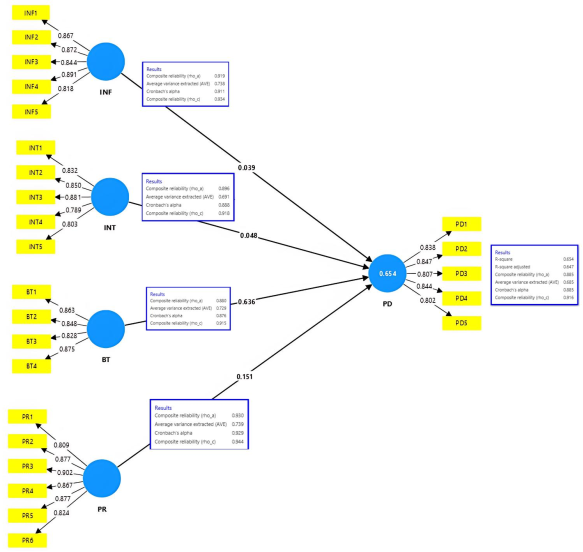
The measurement model was assessed by looking at reliability, convergent validity, and discriminant validity. Reliability was confirmed using Cronbach’s alpha and composite reliability (CR), with all constructs surpassing the recommended 0.70 threshold. CR values ranged from 0.880 to 0.930, while Cronbach’s alpha values fell between 0.876 and 0.929, showing that the constructs were consistently reliable. Convergent validity was evaluated through Average Variance Extracted (AVE), and all values were comfortably above the 0.50 benchmark. The AVE scores ranged from 0.685 for Purchase Decision to 0.739 for Perceived Relevance, indicating that the measurement items effectively represented their respective constructs. Additionally, factor loadings for all items were strong, ranging from 0.789 to 0.902, which further supports the validity of the measures.
6.3. Discriminant Validity Analysis
Discriminant validity was assessed using the Fornell-Larcker Criterion, which evaluates the distinctiveness of constructs by comparing the square roots of their AVE values to the inter- construct correlations. The results confirmed that the square roots of AVE values for all constructs were higher than their correlations with other constructs, ensuring that each construct was conceptually unique and distinct within the proposed model. For instance, the square root of AVE for Brand Trust (0.854) exceeded its correlations with Purchase Decision (0.796), Informativeness (0.680), and Perceived Relevance (0.679). Similarly, the AVE for Perceived Relevance (0.860) was greater than its correlations with Purchase Decision (0.635), Interactivity (0.581), and Brand Trust (0.679). These findings confirm that each construct captures unique dimensions of the social media marketing features and their relationship to purchase decisions, providing robust evidence for discriminant validity within the measurement model.
Table 4. Discriminant Validity: Fornell-Larcker Criterion.

BT

INF

INT

PD

PR

Brand Trust (BT)

0.854

Informativeness (INF)

0.680

0.859

Interactivity (INT)

0.655

0.812

0.831

Purchase Decision (PD)

0.796

0.607

0.584

0.828

Perceived Relevance (PR)

0.679

0.642

0.581

0.635

0.860

Source: Collected from SmartPLS 4.0
6.4. Multicollinearity Check
To ensure there were no multicollinearity issues, the Variance Inflation Factor (VIF) values were examined. According to Vu, multicollinearity is absent if VIF values are below 5.
The results confirmed that all constructs and items met this criterion, indicating no multicollinearity issues in the dataset.
Table 5. Multicollinearity Test (VIF Values).

Construct

Item

VIF

Purchase Decision

PD1

2.067

PD2

2.042

PD3

1.890

PD4

1.860

Brand Trust

BT1

1.569

BT2

1.817

BT3

2.128

BT4

1.707

Perceived Relevance

PR1

1.910

PR2

2.124

PR3

2.446

PR4

2.207

PR5

1.299

Informativeness

INF1

2.264

INF2

2.592

INF3

2.147

INF4

1.538

INF5

1.299

Interactivity

INT1

1.321

INT2

1.351

INT3

1.411

INT4

1.218

Source: Collected from SmartPLS 4.0
6.5. Structural Model Summary
The structural model was assessed to evaluate the relationships among the constructs using path coefficients (β), t-values, and p-values. A two-tailed test at a 5% significance level was applied, with t-values >1.96 considered statistically significant.
Table 6. Hypothesis Testing Results.

Path

Co-efficient (β)

t-Values

p-Values

Result

H1: Brand Trust has an effect on purchase decision

0.636

8.814

0.000

Accepted

H2: Perceived Relevance has an effect on purchase decision

0.151

2.306

0.021

Accepted

H3: Informativeness has an effect on purchase decision

0.039

0.414

0.679

Rejected

H4: Interactivity has an effect on purchase decision

0.048

0.521

0.301

Rejected

Source: Collected from SmartPLS 4.0
Figure 2. Measurement Model Summary.
H1: Brand Trust: Purchase Decision: This hypothesis was strongly supported (β = 0.636, t- value = 8.814, p < 0.001), indicating that brand trust plays a crucial role in shaping purchase decisions. This finding aligns with prior research emphasizing the importance of trust in reducing perceived risk and fostering consumer confidence, Ebrahim .
H2: Perceived Relevance: Purchase Decision: A significant relationship was also observed between perceived relevance and purchase decisions (β = 0.151, t-value = 2.306, p = 0.011). This highlights the role of tailored, meaningful content in influencing consumer behavior, as suggested by Zh Measurement Model Summary and Chang .
H3: Informativeness: Purchase Decision: Contrary to expectations, informativeness did not significantly impact purchase decisions (β = 0.039, t-value = 0.414, p = 0.339). While informative content may attract attention, it appears insufficient to directly drive purchasing behavior in this context.
H4: Interactivity: Purchase Decision: Similarly, interactivity was found to have no significant effect (β = 0.048, t-value = 0.521, p = 0.301). Although interactivity fosters engagement, its isolated impact on purchase decisions may be limited, requiring further exploration in future studies.
7. Overall Findings of the Study
This study set out to explore how social media marketing features—namely Informativeness, Interactivity, and Perceived Relevance—along with Brand Trust, influence purchase decisions within Bangladesh’s restaurant industry. By employing SmartPLS for Structural Equation Modeling (SEM), this research provides empirical evidence that validates and challenges prior assumptions about the relationships between these constructs. The findings offer theoretical and practical insights into how consumers interact with social media marketing content and the factors that ultimately drive purchase decisions.
The study’s results reinforce the pivotal role of trust in consumer decision-making, challenge common assumptions regarding informativeness and interactivity, and highlight the importance of perceived relevance in influencing purchase behavior. While Brand Trust emerged as the strongest predictor of Purchase Decisions, the findings indicate that Informativeness and Interactivity do not have direct effects, suggesting that simply providing detailed product information or fostering social media engagement is insufficient to influence consumer action. The study also confirms that Perceived Relevance plays a significant role in consumer decision-making, further emphasizing the need for tailored marketing strategies that align with audience expectations.
The findings revealed that Brand Trust is the strongest predictor of Purchase Decisions, with a highly significant path coefficient (β = 0.636, t = 8.814, p < 0.001). This highlights the crucial role of trust in shaping consumer behavior, particularly in service-based industries such as restaurants, where the perceived risk of purchase is inherently high. Consumers rely heavily on trust to reduce uncertainty and mitigate perceived risks associated with service quality; this finding underscores the need to integrate interactivity with other persuasive elements such as trust-building strategies, promotional offers, and compelling calls to action to enhance the effectiveness of interactive content in influencing consumer purchases.
Results indicated that the square root of AVE for Brand Trust (0.854) exceeded its correlations with Purchase Decision (0.796) and Perceived Relevance (0.679), confirming that each construct was statistically distinct and reliable. These findings contribute valuable insights into social media marketing strategies in the restaurant industry, emphasizing the dominant role of Brand Trust and Perceived Relevance in influencing consumer purchase behavior.
However, the insignificance of Informativeness and Interactivity highlights the need for businesses to re-evaluate their reliance on purely factual content and engagement-driven strategies. Instead, restaurant brands should focus on building trust, enhancing relevance, and leveraging authentic brand experiences to maximize the impact of their social media marketing efforts. Future research could further explore how different content types, consumer demographics, and emerging social media trends influence purchasing behavior in digital environments.
8. Recommendations & Conclusion
8.1. Recommendations
Based on the findings, it is recommended that restaurant brands in Bangladesh, focus on delivering highly informative, relevant, and engaging content via social media platforms such as Facebook, Instagram, TikTok, and YouTube to positively influence consumer purchase decisions. Emphasizing informativeness by sharing accurate and timely information about menu offerings, promotions, and events can strengthen consumer confidence and trust. Additionally, leveraging interactivity through features like comments, shares, and real-time responses can foster stronger consumer-brand relationships, even if interactivity does not directly impact purchase decisions.
Tailored and localized marketing strategies that resonate with the target audience's preferences should be developed to enhance perceived relevance, ultimately driving consumer engagement. To ensure the effectiveness of these efforts, brands are encouraged to adopt social media analytics tools to monitor consumer responses and refine campaigns based on data-driven insights. Furthermore, consistent and transparent communication is essential for building trust, which plays a pivotal role in enhancing purchase intentions. Investing in the expertise of digital marketing professionals and staying updated on emerging trends in social media marketing can further amplify the impact of these strategies.
The primary objective of this study was to examine the direct effects of social media marketing features—Informativeness, Interactivity, and Perceived Relevance—and Brand Trust on Purchase Decisions within the restaurant industry in Bangladesh. The results indicate that Brand Trust has the strongest impact on Purchase Decisions, highlighting its essential role in shaping consumer confidence and influencing purchasing behavior. The findings suggest that businesses should prioritize building credibility and reliability through social media platforms, ensuring that brand communication remains transparent, consistent, and engaging.
The analysis further demonstrated that Perceived Relevance significantly influences Purchase Decisions, indicating that consumers are more likely to engage with marketing content that aligns with their preferences and interests. This emphasizes the importance of tailored and meaningful brand messaging in digital marketing strategies. However, as Perceived Relevance did not show a significant association with Brand Trust, businesses should balance personalization with authenticity to ensure that marketing efforts do not lead to consumer skepticism. Informativeness, despite being a key aspect of social media marketing, did not have a significant direct impact on Purchase Decisions.
The findings of this study reinforce the importance of managing online communities to build strong consumer relationships. Business practitioners, particularly in the restaurant sector, should leverage social media platforms to design persuasive content, enhance consumer engagement, and strengthen brand positioning. Strategic use of real-time interactions, visually appealing advertisements, and customer-driven content can enhance consumer trust and foster long-term brand loyalty. Finally, adapting to changing consumer preferences by aligning marketing strategies with audience expectations will be essential in strengthening consumer relationships and driving purchase decisions. Restaurants should continuously evaluate their digital marketing approaches, test different engagement strategies, and implement localized marketing techniques tailored to their target audience in Bangladesh.
8.2. Further Research Direction
This study provides valuable insights into the impact of social media marketing features (Informativeness, Interactivity, and Perceived Relevance, and Brand Trust) on Purchase Decisions within the restaurant industry in Bangladesh. However, this study investigated the effects of social media marketing features (Informativeness, Interactivity, and Perceived Relevance) and Brand Trust on Purchase Decisions within the restaurant industry in Bangladesh.
The findings reinforce that social media platforms serve as critical engagement channels, allowing businesses to build consumer trust and influence purchase behavior effectively. Among the three examined social media marketing features, Informativeness emerged as the most influential predictor of Purchase Decisions, both directly and indirectly through Brand Trust. This aligns with Kang et al. and Moslehpour et al. , who emphasized that detailed and transparent brand communication fosters consumer confidence and decision- making. Perceived Relevance also significantly affected Purchase Decisions, reflecting Naeem’s insights that tailored and meaningful content enhances consumer engagement. However, its insignificant effect on Brand Trust highlights the need for marketers to balance customization with authenticity, as overly personalized content may lead to skepticism.
These findings hold significant practical implications for restaurant marketers. By strategically leveraging social media’s informativeness and interactive capabilities, businesses can enhance consumer trust and positively influence Purchase Decisions. Policymakers and industry leaders should also recognize the growing reliance on social media engagement, ensuring businesses adopt data-driven strategies that align with evolving consumer preferences.
In conclusion, this study highlights the critical interplay between Informativeness, Interactivity, Perceived Relevance, and Brand Trust in shaping consumer behavior in social media-driven environments. By aligning marketing efforts with consumer expectations and fostering digital trust, businesses in the restaurant sector can strengthen customer relationships, enhance purchase likelihood, and sustain long-term market success.
After that, although this study relied on quantitative methods, qualitative approaches such as in-depth interviews, focus groups, or ethnographic studies could provide richer insights into consumer perceptions and behaviors. Qualitative research can also uncover nuances in how consumers interpret social media marketing messages and their influence on trust and Purchase Decisions.
Next, Consumer responses to social media marketing features and brand trust may vary based on demographic and psychographic characteristics such as age, gender, income level, lifestyle, and social media usage behavior. Future research should investigate how these factors moderate the relationship between social media marketing constructs and Purchase Decisions.
Then, the integration of emerging technologies such as Augmented Reality (AR), Artificial Intelligence (AI), and Chatbots in social media marketing strategies is transforming how brands interact with consumers. Future research could explore how AI-driven personalized marketing, virtual brand experiences, and interactive AI-based customer service influence consumer trust and Purchase Decisions. Lastly, this study employed a non-random convenience sampling method, which, while practical, may limit the generalizability of the findings. Future research should adopt random or stratified sampling techniques to ensure a more representative sample and enhance the robustness of statistical results.
In conclusion, this study highlights the critical interplay between Perceived Relevance, and Brand Trust in shaping consumer behavior in social media-driven environments. By aligning marketing efforts with consumer expectations and fostering digital trust, businesses in the restaurant sector can strengthen customer relationships, enhance purchase likelihood, and sustain long-term market success.
Abbreviations

AR

Augmented Reality

AI

Artificial Intelligence

SEM

Structural Equation Model

Author Contributions
Meher Neger: Conceptualization, Supervision, Validation, Visualization, Writing – review & editing
Hure Jannat Aorna: Data curation, Formal Analysis, Investigation, Methodology, Software, Writing – original draft
Conflicts of Interest
The authors declare that they have no any conflicts of interest.
References
[1] Alalwan, A. A. (2018). Investigating the impact of social media advertising features on customer purchase intention. International Journal of Information Management, 42, 65-77.
[2] Arjun, R., Kuanr, A., & Suprabha, K. R. (2021). Developing banking intelligence in emerging markets: Systematic review and agenda. International Journal of Information Management Data Insights, 1(2), 1-11.
[3] Bilgin, Y., & Kethüda, Ö. (2022). Charity social media marketing and its influence on charity brand image, brand trust, and donation intention. Voluntas: International Journal of Voluntary and Nonprofit Organizations, 1-12.
[4] Chatterjee, S., Kar, A. K., & Dwivedi, Y. K. (2021). Intention to use IoT by aged Indian consumers. Journal of Computer Information Systems, 1-12.
[5] Chaudhuri, A., & Holbrook, M. B. (2001). The chain of effects from brand trust and brand affect brand performance: The role of brand loyalty. Journal of Marketing, 65(2), 81-93.
[6] Chen, S. C., & Lin, C. P. (2019). Understanding the effect of social media marketing activities: The mediation of social identification, perceived value, and satisfaction. Technological Forecasting and Social Change, 140, 22-32.
[7] Cheung, M. L., Pires, G., & Rosenberger, P. J. (2020). The influence of perceived social media marketing elements on consumer-brand engagement and brand knowledge. Asia Pacific Journal of Marketing and Logistics, 32(3), 695-720.
[8] Cheung, M. L., Pires, G., Rosenberger, P. J., III, Leung, W. K., & Chang, M. K. (2021). The role of social media elements in driving co-creation and engagement. Asia Pacific Journal of Marketing and Logistics, 33(10), 1994-2018.
[9] Ebrahim, R. S. (2020) The role of trust in understanding the impact of social media marketing on brand equity and brand loyalty. Journal of Relationship Marketing, 19(4), 287-308.
[10] Fornell, C., & Larcker, D. F. (1981) Evaluating structural equation models with unobservable variables and measurement error. Journal of Marketing Research, 18(1), 39-50.
[11] Gautam, V., & Sharma, V. (2017). The mediating role of customer relationship on the social media marketing and purchase intention relationship with special reference to luxury fashion brands. Journal of Promotion Management, 23(6), 872-888.
[12] Gómez, M., Lopez, C., & Molina, A. (2019). An integrated model of social media engagement. Computers in Human Behavior, 96, 196-206.
[13] Grover, P., Kar, A. K., & Janssen, M. (2019). Diffusion of blockchain technology: Insights from academic literature and social media analytics. Journal of Enterprise Information Management, 32(5), 735-757.
[14] Gruzd, A., Staves, K., & Wilk, A. (2012). Connected scholars: Examining the role of social media in research practices of faculty using the UTAUT model. Computers in Human Behavior, 28(6), 2340-2350.
[15] Guan, X., Xie, L., Shen, W. G., & Huan, T. C. (2021). Are you a tech-savvy person? Exploring factors influencing customers using self-service technology. Technology in Society, 65, Article 101564.
[16] Hafez, M. (2021). The impact of social media marketing activities on brand equity in the banking sector in Bangladesh: The mediating role of brand love and brand trust. International Journal of Bank Marketing, 39(7), 1353-1376.
[17] Hair, J. F., Hult, G. T. M., Ringle, C. M., & Sarstedt, M. (2017). A primer on partial least squares structural equation modeling (PLS-SEM) (2nd ed.). Sage Publications.
[18] Hanaysha, J. R. (2018). An examination of the factors affecting consumer’s purchase de- cision in the Malaysian retail market. PSU Research Review, 2(1), 7-23.
[19] Hanaysha, J. R. (2022). Exploring the impact of social media marketing features on purchase intention in the fast-food industry. Metamorphosis: A Journal of Management Research, 21(2), 75-85.
[20] Harman, H. H. (1967). Modern factor analysis. Chicago: IL: University of Chicago Press. Hasan, M., & Sohail, M. S. (2021). The influence of social media marketing on consumers’ purchase decision: Investigating the effects of local and nonlocal brands. Journal of International Consumer Marketing, 33(3), 350-367.
[21] Hewett, K., Rand, W., Rust, R. T., & van Heerde, H. J. (2016). Brand buzz in the echoverse. Journal of Marketing, 80(3), 1-24.
[22] Henseler, J., Ringle, C. M., & Sarstedt, M. (2015). A new criterion for assessing discriminant validity in variance-based structural equation modeling. Journal of the Academy of Marketing Science, 43(1), 115-135.
[23] Huang, L., Clarke, A., Heldsinger, N., & Tian, W. (2019). The communication role of social media in social marketing: A study of the community sustainability knowledge dissemination on LinkedIn and Twitter. Journal of Marketing Analytics, 7(2), 64-75.
[24] Islam, H., Jebarajakirthy, C., & Shankar, A. (2021). An experimental based investigation into the effects of website interactivity on customer behavior in on- line purchase con- text. Journal of Strategic Marketing, 29(2), 117-140.
[25] Jadil, Y., Rana, N. P., & Dwivedi, Y. K. (2022). Understanding the drivers of online trust and intention to buy on a website: An emerging market perspective. International Journal of Information Management Data Insights, 2(1), Article 100065.
[26] Jensen, J. F. (1998). ‘Interactivity’: Tracking a new concept in media and communication studies. Nordicom Review, 19(1), 185-204. Jo, S. A. (2013). Impact of company’s sms marketing activities on perceived value and customer loyalty. Focusing on Facebook (master’s dissertation. Hong-Ik University).
[27] Kang, M. J. (2005). A study on the effect of features of brand community using one person media on consumers. (Master’s Dissertation, Seoul National University).
[28] Kaplan, A., & Haenlein, M. (2020). Rulers of the world, unite! The challenges and opportunities of artificial intelligence. Business Horizons, 63(1), 37-50.
[29] Kim, J., & Sung, Y. (2009). The effects of celebrity endorsement on brand image: The role of product-endorser fit. Journal of Advertising Research, 49(3), 279-286.
[30] Kiousis, S. (2002). Interactivity: A concept explication. New Media & Society, 4(3), 355-383.
[31] Lee, J., & Hong, I. B. (2016). Predicting positive user responses to social media advertising: The roles of emotional appeal, informativeness, and creativity. International Journal of Information Management, 36(3), 360-373.
[32] Liao, S. H., Chung, Y. C., & Chang, W. J. (2019). Interactivity, engagement, trust, purchase intention and word-of-mouth: A moderated mediation study. International Journal of Services Technology and Management, 25(2), 116- 137.
[33] Lin, X., Featherman, M., Brooks, S. L., & Hajli, N. (2019). Exploring gender differences in online consumer purchase decision making: An online product presentation perspective. Information Systems Frontiers, 21(5), 1187-1201.
[34] Liu, H., Jayawardhena, C., Osburg, V. S., Yoganathan, V., & Cartwright, S. (2021). Social sharing of consumption emotion in electronic word of mouth (eWOM): A cross-media perspective. Journal of Business Research, 132, 208-220.
[35] Liu, L., Lee, M. K., Liu, R., & Chen, J. (2018). Trust transfer in social media brand com- munities: The role of consumer engagement. International Journal of Information Management, 41, 1-13.
[36] Logan, K., Bright, L. F., & Gangadhar Batla, H. (2012). Facebook versus television: Advertising value perceptions among females. Journal of Research in Interactive Marketing, 6(3), 164-179.
[37] Mason, A. N., Narcum, J., & Mason, K. (2021). Social media marketing gains importance after Covid-19. Cogent Business & Management, 8(1), Article 1870797.
[38] McClure, C., & Seock, Y. K. (2020). The role of involvement: Investigating the effect of brand’s social media pages on consumer purchase intention. Journal of Retailing and Consumer Services, 53, 1-8.
[39] Mishra, A., Baker-Eveleth, L., Gala, P., & Stachofsky, J. (2022). Factors influencing actual usage of fitness tracking devices: Empirical evidence from the UTAUT model. Health Marketing Quarterly, 1-20.
[40] Moslehpour, M., Dadvari, A., Nugroho, W., & Do, B. R. (2020). The dynamic stimulus of social media marketing on purchase intention of Indonesian airline products.
[41] Naeem, M. (2021). Do social media platforms develop consumer panic buying during the fear of Covid-19 pandemic. Journal of Retailing and Consumer Services, 58, Article 102226.
[42] Napoli, J., Dickinson, S. J., Beverland, M. B., & Farrelly, F. (2014). Measuring consumer- based brand authenticity. Journal of Business Research, 67(6), 1090-1098.
[43] Park, J., Hyun, H., & Thavisin, T. (2021). A study of antecedents and outcomes of social media WOM towards luxury brand purchase intention. Journal of Retailing and Consumer Services, 58, Article 102272.
[44] Park, N., Kee, K. F., & Valenzuela, S. (2009). Being immersed in social networking environment: Facebook groups, uses and gratifications, and social outcomes. Cyberpsychology & Behavior, 12(6), 729-733.
[45] Puriwat, W., & Tripopsakul, S. (2021). Explaining social Media adoption for a business purpose: An application of the UTAUT model. Sustainability, 13(4), 2082.
[46] Podsakoff, P. M., Mackenzies, S. B., (2003), Common method biases in behavioral research, Journal of Applied Psychology, 88(5), 879.
[47] Rotzoll, K. B., & Haefner, J. E. (1990). Advertising in contemporary society. Cincinnati, OH: South-Western Publishing 2nd ed.
[48] Salem, M. Z. (2018). Effects of perfume packaging on Basque female consumers purchase decision in Spain. Management Decision, 56(8), 1748-1768.
[49] Sharma, A., Fadahunsi, A., Abbas, H., & Pathak, V. K. (2022). A multi-analytic approach to predict social media marketing influence on consumer purchase intention. Journal of Indian Business Research, 14(2), 125-149.
[50] Sohail, M. S., Hasan, M., & Sohail, A. F. (2020). The impact of social media marketing on brand trust and brand loyalty: An Arab perspective. International Journal of Online Marketing (IJOM), 10(1), 15-31.
[51] Venkatesh, V., Morris, M. G., Davis, G. B., & Davis, F. D. (2003). User acceptance of information technology: Toward a unified view. MIS Quarterly, 425-478.
[52] Vu, H. Q., Li, G., Law, R., & Ye, Q. (2015). Exploring the impact of social media on hotel service performance: A sentimental analysis approach. International Journal of Hospitality Management, 45, 77-87.
[53] Wang, X. W., Cao, Y. M., & Park, C. (2019). The relationships among community experience, community commitment, brand attitude, and purchase intention in social media. International Journal of Information Management, 49, 475-488.
[54] Warren, A. M., Sulaiman, A., & Jaafar, N. I. (2014). Social media effects on fostering online civic engagement and building citizen trust and trust in institutions. Government Information Quarterly, 31(2), 291-301.
[55] Zeng, B., & Gerritsen, R. (2014). What do we know about social media in tourism? A review. Tourism Management Perspectives, 10, 27-36.
[56] Zhu, Y. Q., & Chang, J. H. (2016). The key role of relevance in personalized advertisement: Examining its impact on perceptions of privacy invasion, self- awareness, and continuous use intentions. Computers in Human Behavior, 65, 442-447.
Cite This Article
  • APA Style

    Neger, M., Aorna, H. J. (2025). Influence of Social Media Marketing on Consumers’ Purchasing Decision Towards the Restaurant Industry in Bangladesh. Journal of Business and Economic Development, 10(3), 147-162. https://doi.org/10.11648/j.jbed.20251003.13

    Copy | Download

    ACS Style

    Neger, M.; Aorna, H. J. Influence of Social Media Marketing on Consumers’ Purchasing Decision Towards the Restaurant Industry in Bangladesh. J. Bus. Econ. Dev. 2025, 10(3), 147-162. doi: 10.11648/j.jbed.20251003.13

    Copy | Download

    AMA Style

    Neger M, Aorna HJ. Influence of Social Media Marketing on Consumers’ Purchasing Decision Towards the Restaurant Industry in Bangladesh. J Bus Econ Dev. 2025;10(3):147-162. doi: 10.11648/j.jbed.20251003.13

    Copy | Download

  • @article{10.11648/j.jbed.20251003.13,
      author = {Meher Neger and Hure Jannat Aorna},
      title = {Influence of Social Media Marketing on Consumers’ Purchasing Decision Towards the Restaurant Industry in Bangladesh
    },
      journal = {Journal of Business and Economic Development},
      volume = {10},
      number = {3},
      pages = {147-162},
      doi = {10.11648/j.jbed.20251003.13},
      url = {https://doi.org/10.11648/j.jbed.20251003.13},
      eprint = {https://article.sciencepublishinggroup.com/pdf/10.11648.j.jbed.20251003.13},
      abstract = {The broader objective of the study was to evaluate the influence of the social media marketing features—Informativeness, Interactivity, Perceived Relevance and Brand Trust on consumers' purchase decisions within the restaurant industry in Bangladesh. Employing a quantitative research design, data were collected via an online survey targeting active social media users who regularly engage with restaurant brands. A total of 205 valid responses were analyzed using SmartPLS 4.0 for structural equation modeling. The findings revealed that Brand Trust plays a significant role in influencing Purchase Decisions, underscoring the importance of trust in reducing uncertainty and fostering consumer confidence in service-oriented sectors such as restaurants. These finding highlights that maintaining transparent and trustworthy communication on social media platforms is essential for driving purchasing behavior. Perceived Relevance was also identified as a significant predictor of Purchase Decisions, suggesting that tailored and relevant marketing content on social media effectively captures consumer attention and drives purchasing behavior. However, the study found that while relevance engages consumers, it does not necessarily translate into building long-term trust in the brand. In contrast, Informativeness and Interactivity were found to have no significant direct effects on Purchase Decisions. Despite this, these features remain important for fostering engagement and building a foundation for trust, as interactive and informative content can enhance the consumer-brand relationship over time. In summary, the findings emphasize the pivotal role of Brand Trust and Perceived Relevance in influencing Purchase Decisions, while Informativeness and Interactivity serve as supportive elements in strengthening consumer engagement and trust. These results offer actionable insights for marketers in the restaurant industry to optimize their social media strategies by prioritizing trust- building and relevance.},
     year = {2025}
    }
    

    Copy | Download

  • TY  - JOUR
    T1  - Influence of Social Media Marketing on Consumers’ Purchasing Decision Towards the Restaurant Industry in Bangladesh
    
    AU  - Meher Neger
    AU  - Hure Jannat Aorna
    Y1  - 2025/08/13
    PY  - 2025
    N1  - https://doi.org/10.11648/j.jbed.20251003.13
    DO  - 10.11648/j.jbed.20251003.13
    T2  - Journal of Business and Economic Development
    JF  - Journal of Business and Economic Development
    JO  - Journal of Business and Economic Development
    SP  - 147
    EP  - 162
    PB  - Science Publishing Group
    SN  - 2637-3874
    UR  - https://doi.org/10.11648/j.jbed.20251003.13
    AB  - The broader objective of the study was to evaluate the influence of the social media marketing features—Informativeness, Interactivity, Perceived Relevance and Brand Trust on consumers' purchase decisions within the restaurant industry in Bangladesh. Employing a quantitative research design, data were collected via an online survey targeting active social media users who regularly engage with restaurant brands. A total of 205 valid responses were analyzed using SmartPLS 4.0 for structural equation modeling. The findings revealed that Brand Trust plays a significant role in influencing Purchase Decisions, underscoring the importance of trust in reducing uncertainty and fostering consumer confidence in service-oriented sectors such as restaurants. These finding highlights that maintaining transparent and trustworthy communication on social media platforms is essential for driving purchasing behavior. Perceived Relevance was also identified as a significant predictor of Purchase Decisions, suggesting that tailored and relevant marketing content on social media effectively captures consumer attention and drives purchasing behavior. However, the study found that while relevance engages consumers, it does not necessarily translate into building long-term trust in the brand. In contrast, Informativeness and Interactivity were found to have no significant direct effects on Purchase Decisions. Despite this, these features remain important for fostering engagement and building a foundation for trust, as interactive and informative content can enhance the consumer-brand relationship over time. In summary, the findings emphasize the pivotal role of Brand Trust and Perceived Relevance in influencing Purchase Decisions, while Informativeness and Interactivity serve as supportive elements in strengthening consumer engagement and trust. These results offer actionable insights for marketers in the restaurant industry to optimize their social media strategies by prioritizing trust- building and relevance.
    VL  - 10
    IS  - 3
    ER  - 

    Copy | Download

Author Information
  • Abstract
  • Keywords
  • Document Sections

    1. 1. Introduction
    2. 2. Relevant Literature Review& Hypothesis Development
    3. 3. Problem Statement
    4. 4. Conceptual Framework of the Study
    5. 5. Research Methodology
    6. 6. Findings & Their Analysis
    7. 7. Overall Findings of the Study
    8. 8. Recommendations & Conclusion
    Show Full Outline
  • Abbreviations
  • Author Contributions
  • Conflicts of Interest
  • References
  • Cite This Article
  • Author Information